Projects
Streaming Data Pipeline and Performance Optimization
NASA Goddard Space Flight Center, 2025-2026
A modular pipeline that automatically analyzes live data from an operational space telescope with 20+ years of observations. It handles data selection, matching against historical references, image analysis, and validation, and pulls meaningful signals out of noisy data. I found the performance bottlenecks and restructured the algorithms so the pipeline could keep up with long-running streaming datasets, and packaged it with Docker for wider use.
Tools: Python, Docker, Linux
Remote Hardware Control and Automation System
University of Arizona, Steward Observatory, 2023-2025
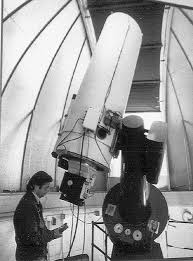
I led a $100K NSF-funded hardware and software upgrade that turned an existing telescope into a remotely operated, robotic system. I wrote the software for camera control, environmental monitoring (pressure and temperature), and communication between components over a TCP/IP client-server architecture. I validated it against simulated hardware before deployment. On the hardware side, I installed instrumentation to stabilize the shutter, constrain camera motion, and monitor pressure. I also measured optical filter performance in the lab and built a Python model of the full system’s throughput. I mentored an undergraduate on the team, and the work was presented at two international conferences (SPIE 2024, AAS 2025). First-author publication in prep.
Tools: C/C++, Python, Bash, TCP/IP, optical testing
Simulation Framework for Pipeline Validation
University of Arizona, 2023-2024
I built simulated observations for Aspera, a NASA-funded space telescope mission, and used them to test and refine its data reduction pipeline before launch.
Tools: Python, simulation
Closed-Loop Motion Control
New York Genome Center, 2023
I helped repurpose a commercial DNA sequencing system into an automated fluorescence microscopy platform. I wrote reusable Python modules for instrument control and data acquisition, and implemented closed-loop PID control for automated positioning, validated by experiment. I also integrated the motion-control hardware, sensors, and data acquisition into one system, and wrote the technical documentation.
Tools: Python, PID control
Optical Instrument Prototype
Columbia University, 2022
I designed, built, and tested a compact spectrograph from partly 3D-printed parts. We tested it with calibration lasers in a darkroom, went through several redesigns of a lenslet array to reduce optical distortion, and then validated it on a 14” telescope. It won first place for research presentation at Columbia AstroFest.
Tools: SolidWorks/CAD, 3D printing, optical alignment, laser testing
Signal Detection in Noisy Time-Series Data
Columbia University · 2022-2023
I built statistical simulations to detect periodic signals in irregularly sampled, noisy time-series data, and compared the results against real observational data.
Tools: Python, astroML, statistical modeling
Embedded Sensor Systems
Clark University, 2020-2021
I built Arduino and Raspberry Pi sensor and data-acquisition systems, including flowmeters and temperature sensors, for more than 25 experiments, and calibrated sensors and diagnosed electrical faults along the way. I also restored the hardware of a 3-meter radio telescope, working with vendors to source parts, and rewrote its control interface. I tested it by tracking the Moon.
Tools: Arduino, Raspberry Pi, C++, Python, Java
Computer Vision: 3D Reconstruction from Images
Tel Aviv University (remote), 2020
I wrote computer-vision code that reconstructs 3D models from 150–200 images, and set up a home lab of cameras and automated, calibrated multi-angle image capture. A graduate student later used the code to model 3D flow in water.
Tools: MATLAB, computer vision, camera calibration